

What Is S-TEN? A Complete Guide to S-TEN 1 and S-TEN 2, Applications, Corrosion Resistance, Specifications and Processing
- Product
- S-TEN
目次
S-TEN™ is a sulfuric acid and hydrochloric acid dew-point corrosion-resistant steel developed by NIPPON STEEL CORPORATION. It is designed for flue-gas treatment equipment and other industrial facilities where acid condensation can cause severe corrosion of conventional carbon steel.
The S-TEN family includes two main grades: S-TEN 1 and S-TEN 2. In simple terms, S-TEN 1 is used where resistance to both sulfuric acid and hydrochloric acid dew-point corrosion is required, while S-TEN 2 combines resistance to sulfuric acid dew-point corrosion with a higher strength level.
However, S-TEN is not a universal acid-resistant steel. Its suitability depends on the type and concentration of acid, gas composition, operating temperature, steel surface temperature, liquid accumulation, deposits, flow conditions, welding procedure and equipment design.
In this guide, Kumagai Specialty Steel explains the differences between S-TEN 1 and S-TEN 2, how acid dew-point corrosion occurs, typical applications, specifications, welding and fabrication considerations, and the information required when sourcing S-TEN plate from Japan.
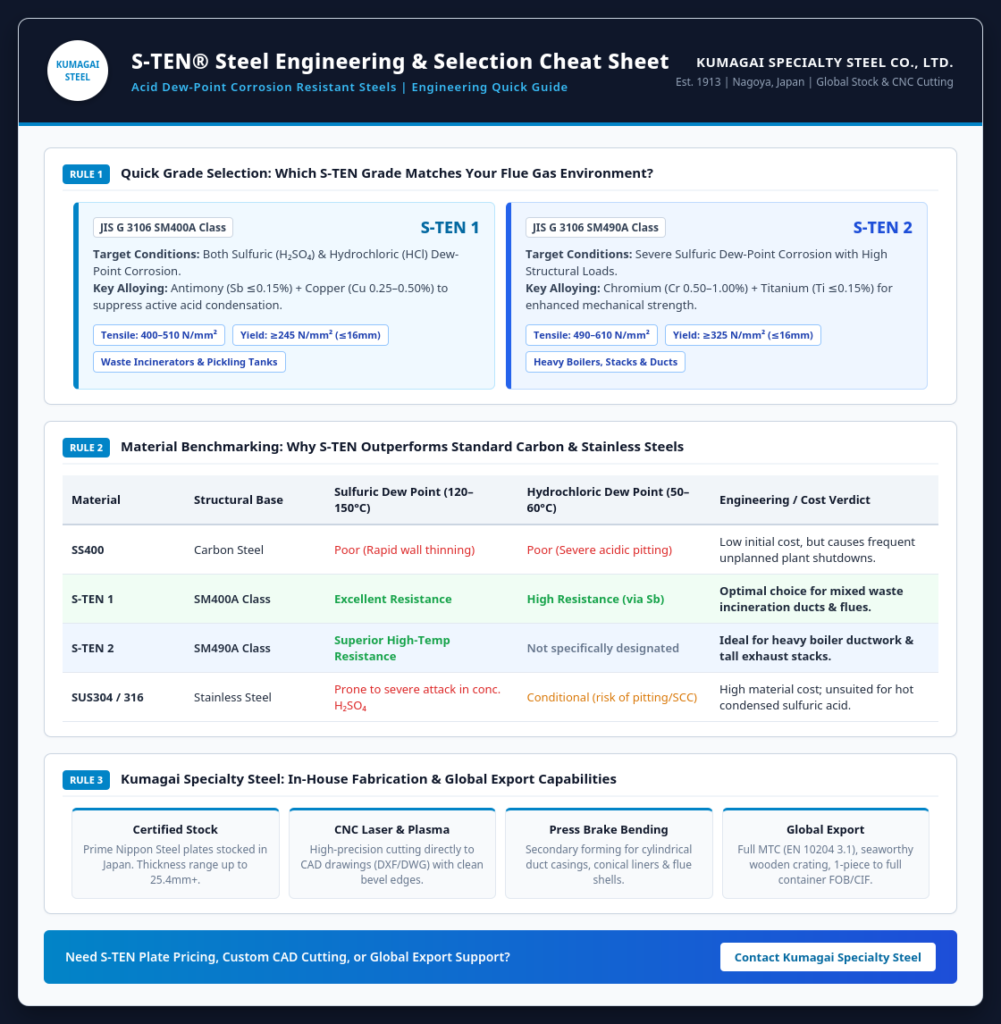
S-TEN at a Glance: Engineering & Selection Cheat Sheet
Before exploring the technical details, use the quick-reference guide below to understand the key differences between S-TEN 1 and S-TEN 2.
The cheat sheet summarizes their target corrosion environments, strength levels, alloying concepts and typical applications. It also provides a practical comparison with SS400 and stainless steels, together with an overview of Kumagai Specialty Steel Co., Ltd.’s stockholding, custom cutting, fabrication and global export capabilities.
Please note that this guide is intended as an initial reference only. Final material selection should be based on the actual flue-gas composition, acid concentration, operating and surface temperatures, condensation conditions, required strength, welding procedures and equipment design.
1.What is S-TEN?
A low-alloy steel developed for acid dew-point corrosion
S-TEN is a family of low-alloy corrosion-resistant steels developed for welded industrial structures exposed to sulfuric acid or hydrochloric acid dew-point corrosion.
In power stations, boilers, waste-to-energy plants and other combustion facilities, flue gas passes through equipment such as air preheaters, gas coolers, dust collectors, ducts, desulfurization systems and stacks. When the flue gas or steel surface falls below the relevant acid dew point, acid-containing condensate can form on the steel surface and cause rapid wall thinning.
This is not the same as ordinary atmospheric rusting. Under severe acid dew-point conditions, conventional carbon steel may corrode rapidly, and some stainless steels may not provide the expected performance. S-TEN was developed specifically to reduce corrosion in these demanding environments.
According to NIPPON STEEL, S-TEN 1 is effective against both sulfuric acid and hydrochloric acid dew-point corrosion, while S-TEN 2 is effective against sulfuric acid dew-point corrosion.
Why is S-TEN needed?
Acid dew-point corrosion can lead to:
- Loss of wall thickness
- Localized perforation
- Flue-gas leakage
- Frequent repair and replacement
- Increased maintenance cost
- Unplanned shutdowns
- Reduced reliability of environmental-control equipment
Simply increasing the thickness of ordinary steel does not always provide the most economical long-term solution. It increases weight and material consumption without addressing the corrosion mechanism itself.
When S-TEN is correctly selected and combined with appropriate equipment design, insulation, drainage, cleaning and inspection, it can help extend service life and reduce maintenance requirements.
2.What Is Acid Dew-Point Corrosion?
What is a dew point?
A dew point is the temperature at which vapor begins to condense into liquid. A familiar example is water forming on the outside of a cold glass.
In flue-gas equipment, the condensate may contain much more than water. Sulfur- and chlorine-bearing combustion gases can form highly corrosive sulfuric acid or hydrochloric acid solutions when the gas or steel surface cools below the relevant acid dew point.
What is sulfuric acid dew-point corrosion?
When sulfur in fuel or feed material is burned, sulfur oxides are generated. Part of the sulfur oxide may be converted into sulfur trioxide, or SO₃. SO₃ then reacts with water vapor in the flue gas to form sulfuric acid vapor.
When the temperature of the steel surface falls below the sulfuric acid dew point, sulfuric acid condenses on the surface. Depending on the gas composition and temperature, the resulting condensate can be hot and highly concentrated, creating a severe corrosion environment.
Sulfuric acid dew-point corrosion is commonly associated with low-temperature sections of:
- Coal-fired and oil-fired boiler systems
- Air preheaters
- Flue-gas ducts
- Dust collectors
- Stacks and chimneys
- Flue-gas desulfurization equipment
- Waste-incineration facilities
What is hydrochloric acid dew-point corrosion?
Waste-incineration facilities and some industrial processes can produce hydrogen chloride gas from chlorine-containing feed material. As the flue-gas temperature decreases, hydrochloric acid-containing condensate may form on the steel surface.
Lower flue-gas temperatures can improve heat recovery and support emissions-control processes, but they may also create hydrochloric acid dew-point corrosion in locations where it was not previously anticipated. S-TEN 1 was developed with resistance to this type of corrosion in mind.
How acid dew-point corrosion develops
How Acid Dew-Point Corrosion Develops
The basic progression sequence in industrial flue gas systems:
Combustion
Fuel combustion generates thermal energy along with sulfur (S) and chlorine (Cl) compounds.
Flue gas containing SOx, HCl and water vapor
Hot exhaust gas carries corrosive sulfur oxides (SO₂, SO₃) and hydrochloric acid vapor through the flue system.
Flue-gas or steel-surface temperature decreases
Heat exchange, duct flow, or cold ambient exposure lowers internal and structural wall temperatures.
The sulfuric acid or hydrochloric acid dew point is reached
Gas temperature drops below acid dew points (sulfuric: approx. 120–150°C; hydrochloric: approx. 50–60°C).
Acid-containing liquid condenses on the steel surface
Highly concentrated, aggressive acid droplets precipitate directly onto steel duct and stack inner surfaces.
Corrosion and wall thinning progress
Severe uniform corrosion, pitting, and rapid wall thinning lead to equipment structural failure and leakages.
💡 Engineering Key Takeaway:
Effective corrosion control therefore requires more than material selection. Engineers should also consider surface temperature, external insulation, drainage, dust deposits, acid mist, wash water and local cold spots.
3.What Is the Difference Between S-TEN 1 and S-TEN 2?
The main differences are the target corrosion environment and strength level. S-TEN 1 is effective against both sulfuric acid and hydrochloric acid dew-point corrosion. S-TEN 2 is intended for sulfuric acid dew-point corrosion and provides a higher tensile strength.
| Comparison | S-TEN 1 | S-TEN 2 |
|---|---|---|
| Main corrosion resistance | Sulfuric acid and hydrochloric acid dew-point corrosion | Sulfuric acid dew-point corrosion |
| Applicable JIS grade for hot-rolled plate | JIS G 3106 SM400A | JIS G 3106 SM490A |
| Tensile strength | 400–510 N/mm² | 490–610 N/mm² |
| Strength class | 400 N/mm² class | 490 N/mm² class |
| Main reason for selection | Resistance where hydrochloric acid dew-point corrosion may also occur | Sulfuric acid dew-point resistance plus higher strength |
| Typical applications | Waste-incineration flue systems, ducts, stack liners and hydrochloric acid pickling tanks | Boilers, dust collectors, ducts and other flue-gas equipment requiring higher strength |
*Manufactured by Nippon Steel Corporation. Stocked, custom-cut, and exported globally by Kumagai Specialty Steel Co., Ltd.
When should S-TEN 1 be considered?
S-TEN 1 is generally the first grade to consider when hydrochloric acid dew-point corrosion may occur in addition to sulfuric acid dew-point corrosion. Typical examples include waste-incineration flue systems, certain stack liners, tubular air preheaters and hydrochloric acid pickling equipment.
The phrase “resistant to hydrochloric acid,” however, should not be interpreted too broadly. S-TEN 1 is not necessarily suitable for every hydrochloric acid service. Dilute acid, continuously flowing low-pH wash water, stagnant acidic liquid and contaminants can produce very different corrosion behavior.
When should S-TEN 2 be considered?
S-TEN 2 is typically considered when sulfuric acid dew-point corrosion is the primary problem and a strength level comparable to SM490A is required. It can be useful when designers need both corrosion resistance and higher structural strength in flue-gas equipment.
S-TEN 2 is not positioned as a hydrochloric acid dew-point corrosion-resistant grade. Where chlorine or hydrochloric acid condensation is expected, the environment should be reviewed carefully and S-TEN 1 or another material should be considered.
4.Why Is S-TEN Resistant to Acid Dew-Point Corrosion?
S-TEN uses a controlled low-alloy composition to improve resistance to the target acid dew-point environment. Elements such as copper, chromium and antimony are used differently in S-TEN 1 and S-TEN 2 to achieve the required corrosion performance and strength.
NIPPON STEEL publishes laboratory and field data comparing S-TEN with conventional steel and other materials under sulfuric acid and hydrochloric acid conditions. These data show that S-TEN can significantly reduce corrosion under the specific test conditions for which it was developed.
It is essential to understand what “corrosion resistant” means in this context. S-TEN does not eliminate rust or stop corrosion completely. It is designed to reduce the corrosion rate in specific environments. Corrosion will still progress, and an appropriate corrosion allowance, inspection plan and maintenance strategy remain necessary.
5.Important: S-TEN Is Not a Universal Acid-Resistant Steel
Material selection should never be based on the product name alone.
S-TEN is a low-alloy steel developed for particular sulfuric acid and hydrochloric acid dew-point corrosion conditions. Its performance can vary substantially with:
- Acid type and concentration
- Gas composition, including SO₃, HCl and water content
- Gas temperature and steel surface temperature
- Duration and frequency of condensation
- Liquid or drain accumulation
- Dust, ash and other deposits
- Flow velocity and erosion
- Continuous exposure to wash water
- Contact with dissimilar metals
- Weld-metal composition and weld geometry
- Insulation and local cold spots
NIPPON STEEL notes that in weakly acidic or near-neutral liquid environments, the performance difference between S-TEN and ordinary steel may become small. Stainless steel may perform better under some of these conditions. The manufacturer also cautions against certain continuously wetted, low-pH environments and emphasizes the risks associated with accumulated drain liquid.
Before selecting a material, investigate not only the existing grade and thickness but also:
- Where is the corrosion occurring?
- What is the actual corrosion mechanism?
- What are the gas and liquid compositions?
- What are the operating and surface temperatures?
- Does acidic liquid accumulate locally?
- Are deposits, mist, erosion or wash water involved?
When the environment is uncertain, corrosion testing or consultation with the steel producer and equipment designer may be required.
6.Typical Applications of S-TEN
Coal-fired power plants and boilers
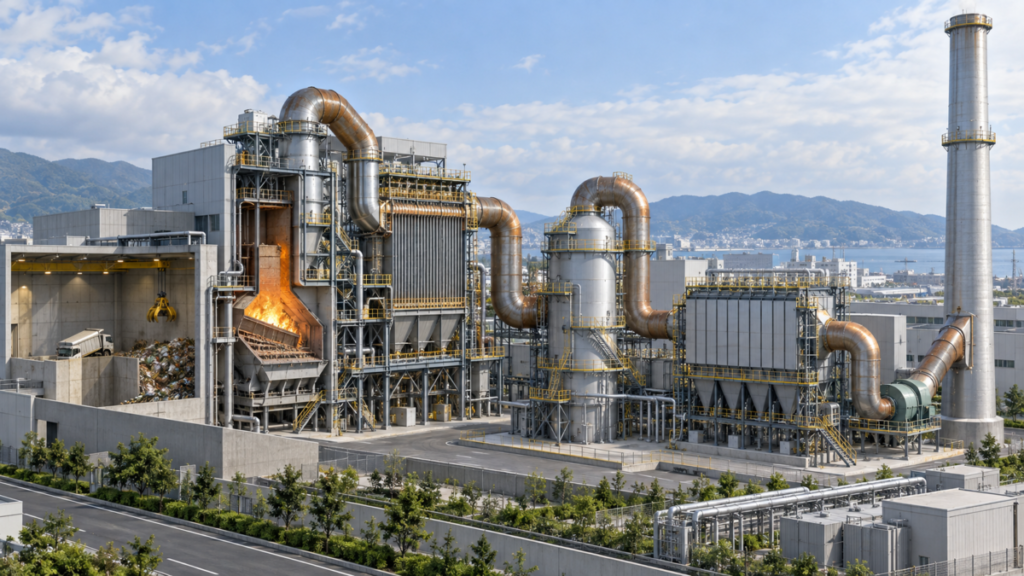
Flue gas generated from sulfur-bearing fuels can cause sulfuric acid dew-point corrosion in low-temperature sections. S-TEN may be considered for air preheaters, flue-gas ducts and other boiler-related exhaust systems.
Waste-to-energy and waste-incineration plants
Flue gas from waste incineration may contain both sulfur oxides and hydrogen chloride. Depending on the temperature profile, both sulfuric acid and hydrochloric acid dew-point corrosion may need to be considered. S-TEN 1 is a candidate material where hydrochloric acid condensation is expected.
Dust collectors and gas-cooling towers
Application examples include casings, ducts and collecting components in dry and wet dust collectors, as well as casings and ducts in gas-cooling towers. Dust accumulation, low-pH wash water and incompletely evaporated spray droplets can increase corrosion and must be managed through design and maintenance.
Flue-gas ducts and stacks
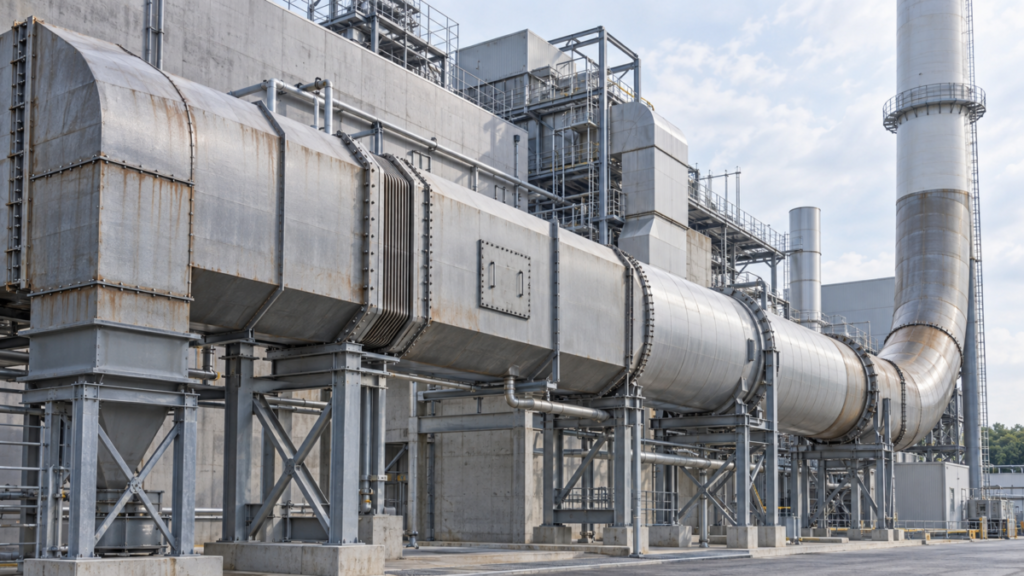
Ducts, expansion sections and internal stack cylinders can be exposed to low steel-surface temperatures and acid condensate. When S-TEN is used, external insulation, effective drainage and the elimination of local liquid traps remain important.
Flue-gas desulfurization systems
S-TEN has application examples in exhaust ducts and afterburner ducts. Areas immediately before or after gas coolers and absorption towers require particular care because acid mist and low-pH liquid may contact the wall.
Hydrochloric acid pickling equipment
S-TEN 1 has been used for hydrochloric acid pickling tanks in metal-treatment operations. Suitability still depends on acid concentration, temperature, contamination, flow and operating conditions.
7.S-TEN Compared with Other Steel Materials
S-TEN vs. SS400
SS400 is a widely used general structural steel offering good availability, fabrication characteristics and initial cost. It is not specifically designed to resist sulfuric acid or hydrochloric acid dew-point corrosion.
S-TEN uses an alloy design intended to reduce corrosion in these particular environments. It can therefore provide longer service life than SS400 when acid dew-point corrosion is the controlling degradation mechanism. If the actual corrosion mechanism is different, however, the benefit may be limited.
S-TEN 1 vs. SM400A
Hot-rolled S-TEN 1 plate conforms to JIS G 3106 SM400A, but the two names do not describe identical products. SM400A is a structural steel specification covering requirements such as chemical composition and mechanical properties. S-TEN 1 provides the corresponding strength level together with enhanced resistance to sulfuric acid and hydrochloric acid dew-point corrosion.
Ordinary SM400A should not be assumed to have the same acid dew-point corrosion resistance as S-TEN 1.
S-TEN 2 vs. SM490A
Hot-rolled S-TEN 2 plate conforms to JIS G 3106 SM490A. It combines the mechanical-property level of SM490A with resistance to sulfuric acid dew-point corrosion.
Ordinary SM490A does not automatically provide the same corrosion resistance as S-TEN 2.
S-TEN vs. SUS304 and SUS316 stainless steel
There is no single answer to the question of whether S-TEN or stainless steel is more corrosion resistant. The result depends on the acid species, concentration, temperature, phase and exposure condition.
Under severe sulfuric acid dew-point conditions involving hot, concentrated acid, S-TEN may outperform conventional stainless steels. In weakly acidic, near-neutral or other aqueous environments, SUS304 or SUS316 may perform better.
Material price is also only one part of the comparison. Engineers and purchasers should evaluate fabrication, welding, required thickness, maintenance, replacement frequency, shutdown cost and total life-cycle cost.
| Material | Primary positioning | Acid dew-point corrosion | Key selection consideration |
|---|---|---|---|
| SS400 | General structural steel | Not specifically designed for it | Compare initial cost with replacement frequency and downtime |
| S-TEN 1 | Sulfuric and hydrochloric acid dew-point corrosion-resistant steel | Effective in the intended sulfuric and hydrochloric acid dew-point environments | Confirm dilute acid, low-pH liquid and stagnant-liquid conditions |
| S-TEN 2 | Higher-strength sulfuric acid dew-point corrosion-resistant steel | Effective in the intended sulfuric acid dew-point environment | Not designated for hydrochloric acid dew-point corrosion |
| SUS304 / SUS316 |
Stainless steel | Performance depends on conditions | Acid type, concentration and temperature may change the ranking |
*Source: Technical selection criteria for industrial flue-gas environments. Plate cutting, inventory stocking, and international export handled by Kumagai Specialty Steel Co., Ltd.
8.Specifications, Chemical Composition and Mechanical Properties
Chemical composition
The following table summarizes the principal ladle-analysis limits published by NIPPON STEEL. Values are mass percent.
| Grade | C | Si | Mn | P | S | Cu | Cr | Ti | Sb |
|---|---|---|---|---|---|---|---|---|---|
| S-TEN 1 | ≤0.14 | ≤0.55 | ≤1.60* | ≤0.025 | ≤0.025 | 0.25–0.50 | — | — | ≤0.15 |
| S-TEN 2 | ≤0.14 | 0.15–0.55 | ≤1.60 | ≤0.035 | ≤0.035 | 0.25–0.50 | 0.50–1.00 | ≤0.15 | — |
*Upper limit of Mn may vary according to thickness classification and delivery specifications.
Manufactured by Nippon Steel Corporation. Stocked, customized via CNC laser/plasma cutting, and exported globally with Mill Test Certificates (MTC) by Kumagai Specialty Steel Co., Ltd.
*The published specification includes an additional relationship between carbon and manganese for S-TEN 1. Elements not shown in the table may be added when necessary. Always confirm the latest producer specification, purchase specification and mill test certificate before design or procurement.]
Mechanical properties of hot-rolled plate
| Grade | Thickness range | Minimum yield point | Tensile strength |
|---|---|---|---|
| S-TEN 1 | Up to 16 mm | 245 N/mm² | 400–510 N/mm² |
| Over 16 mm to 20.2 mm | 235 N/mm² | 400–510 N/mm² | |
| S-TEN 2 | Up to 16 mm | 325 N/mm² | 490–610 N/mm² |
| Over 16 mm to 25.4 mm | 315 N/mm² | 490–610 N/mm² |
*Manufactured by Nippon Steel Corporation. Stocked, customized via CNC laser/plasma cutting to drawings, and exported globally with Mill Test Certificates (MTC) by .
Elongation requirements vary according to thickness and test-piece type. This table is a summary for general comparison. Design and purchase decisions must be based on the latest manufacturer documentation and the agreed order specification.
9.Welding S-TEN
Can S-TEN be welded?
Yes. S-TEN was developed for welded structures and can generally be welded under conditions comparable to ordinary steel of the same strength class.
However, using S-TEN as the base metal does not automatically make the welded joint corrosion resistant. If the deposited weld metal lacks the required corrosion resistance, preferential attack may occur in the weld.
Where the weld must provide corrosion resistance comparable to the S-TEN base metal, dedicated S-TEN welding consumables should be used in accordance with the steel producer’s and consumable manufacturer’s recommendations.
Main welding considerations
- Select the welding consumable for S-TEN 1 or S-TEN 2 and the required strength level.
- Define which surfaces and joints require acid dew-point corrosion resistance.
- Set groove geometry, heat input, preheat and interpass temperature according to thickness and procedure requirements.
- Review consumable selection carefully for dissimilar-metal welding.
- Avoid weld geometry that traps acidic liquid or deposits.
- Consider the corrosion performance of tack welds, repair welds and attachments.
- Follow the latest welding procedure and consumable manufacturer recommendations.
The statement that S-TEN can be welded similarly to ordinary structural steel does not mean that any ordinary welding consumable is suitable when corrosion resistance is required.
10.Cutting, Bending, Machining and Fabrication
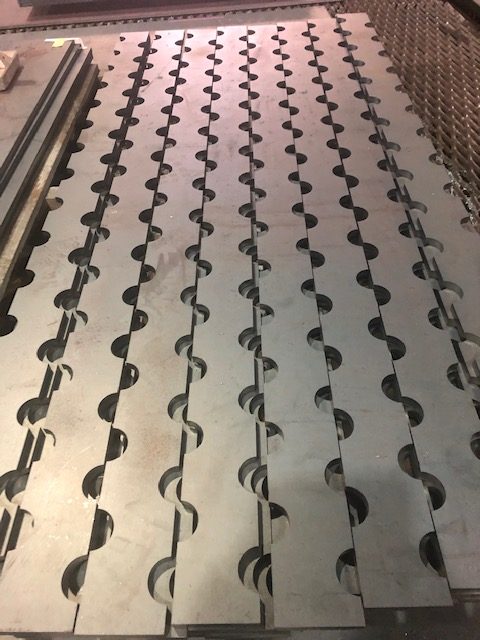
S-TEN can be supplied and processed by laser cutting, plasma cutting, oxy-fuel cutting, bending, drilling, milling, machining, welding and fabrication. The appropriate process depends on plate thickness, geometry, dimensional tolerance, edge-quality requirement, quantity and subsequent operations.
Laser cutting
Laser cutting is suitable for precision profiles, smaller holes and complex geometries in thin and medium-thickness plate. The available thickness range, minimum hole size, heat-affected zone, dross and required edge quality should be reviewed for each part.
Plasma and oxy-fuel cutting
Plasma cutting offers a useful balance of speed and cut quality for medium and heavy plate. Oxy-fuel cutting is suitable for heavier plate and large components. Where final machining is required, an appropriate machining allowance should be added to the cut profile.
Bending
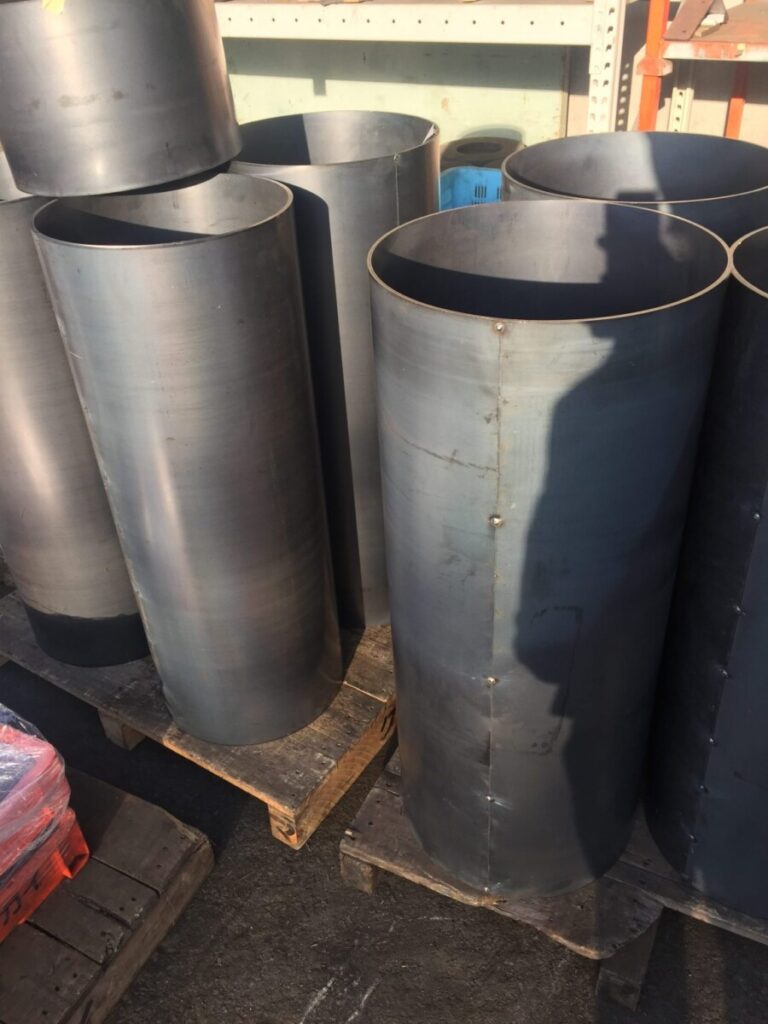
Bending plans should consider thickness, bend radius, rolling direction, bend angle and edge condition. An excessively small bend radius or defects along a thermally cut edge can increase the risk of cracking. Edge preparation and trial bending may be appropriate for demanding parts.
Drilling and machining
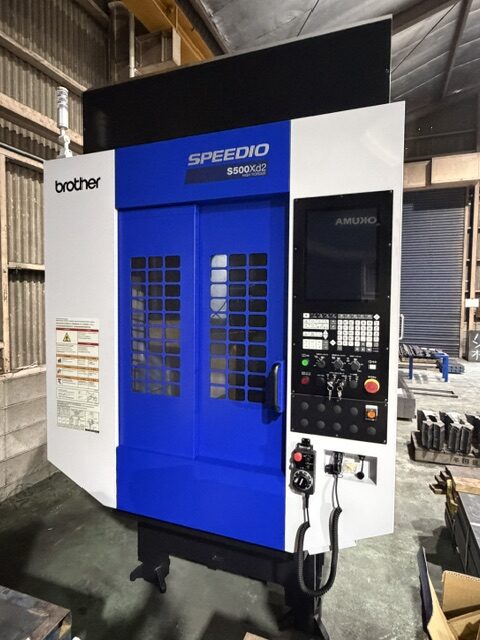
S-TEN can be drilled, milled and machined. By coordinating plate supply, profile cutting, hole processing and finish machining through one supplier, overseas purchasers can reduce the number of procurement interfaces and simplify dimensional responsibility.
Welding and fabricated assemblies
Duct panels, casings, tanks and other components may be supplied as cut parts, bent parts or welded assemblies. Where corrosion resistance is required across welded joints, the welding consumable and procedure must be selected accordingly.
Kumagai Specialty Steel can review drawings and propose an appropriate route from Japanese plate supply through cutting and additional processing.
11.How to Select S-TEN 1 or S-TEN 2
Step 1: Identify the corrosion mechanism
Determine whether the problem is gas-side acid condensation, immersion corrosion, atmospheric corrosion, erosion-corrosion or another mechanism. Collect information on gas composition, liquid pH, acid concentration, temperature and the condition of the existing equipment.
Step 2: Confirm whether sulfuric acid dew-point corrosion is present
If sulfuric acid dew-point corrosion is the controlling mechanism, evaluate S-TEN 1 and S-TEN 2.
Step 3: Check for hydrochloric acid dew-point corrosion
If the flue gas contains hydrogen chloride or hydrochloric acid condensation is expected, focus on S-TEN 1 and compare it with other suitable materials. Do not treat S-TEN 2 as a hydrochloric acid dew-point corrosion grade.
Step 4: Determine the required strength
Confirm whether a 400 N/mm²-class grade is sufficient or whether a 490 N/mm²-class grade is required. Where higher strength and sulfuric acid dew-point resistance are both needed, S-TEN 2 may be appropriate.
Step 5: Confirm thickness and fabrication requirements
Define the plate thickness, size, profile, bending, holes, machining, welding, inspection and required delivery condition.
Step 6: Review equipment design and maintenance
Check drainage, insulation, deposit removal, wash-water practice, access for inspection and maintenance intervals. Even a suitable corrosion-resistant steel may not perform as expected when acidic liquid remains trapped for long periods.
Final material selection should be based on the actual environment, design life and risk level. Consultation with the equipment designer, NIPPON STEEL and the welding-consumable manufacturer may be necessary.
12.S-TEN Plate Availability and Sizes
Kumagai Specialty Steel stocks S-TEN 1 and S-TEN 2 plate in Japan and can supply full plates, rectangular cut pieces and drawing-based profiles. Bending, drilling, machining, welding and fabrication can also be discussed.
Stock levels change continuously. Please contact us with the following information for current availability and quotation:
- Grade: S-TEN 1 or S-TEN 2
- Plate thickness, width and length
- Quantity or total required weight
- Full plate, rectangular cut piece or drawing-based profile
- Required bending, holes, machining or welding
- Application and corrosion environment
- Required delivery date and destination
- Mill test certificate and inspection requirements
- Export packing requirements
- Destination country and preferred Incoterms® rule
If the required thickness or size is not held in stock, alternative sizes, cut-plate supply or mill procurement may be available.
13.Frequently Asked Questions About S-TEN
Frequently Asked Questions (FAQ) – S-TEN Corrosion Resistant Steels
14.Source S-TEN Plate and Processed Parts from Japan
S-TEN should not be selected by grade name alone. The first step is to establish whether the problem is sulfuric acid dew-point corrosion, hydrochloric acid dew-point corrosion or another corrosion mechanism. Required strength, plate thickness, fabrication, drainage and maintenance conditions must then be considered together.
Kumagai Specialty Steel stocks S-TEN 1 and S-TEN 2 plate in Japan. We support material supply as well as laser, plasma and oxy-fuel cutting, bending, drilling, machining, welding and fabrication.
Contact us if you need assistance with any of the following:
- Choosing between S-TEN 1 and S-TEN 2
- Confirming available Japanese stock
- Purchasing cut plate instead of full-size plate
- Producing drawing-based profiles
- Combining cutting, bending and machining in one order
- Sourcing replacement parts for maintenance work
- Preparing processed S-TEN parts for an overseas project
Please send the application, corrosion environment, grade, thickness, dimensions, quantity, drawings, destination and required delivery date. We will review the most suitable supply route, from material-only orders to processed components.